

The Nest Journal
How to Groom Your Cat at Home: A Simple Guide for Cat Owners

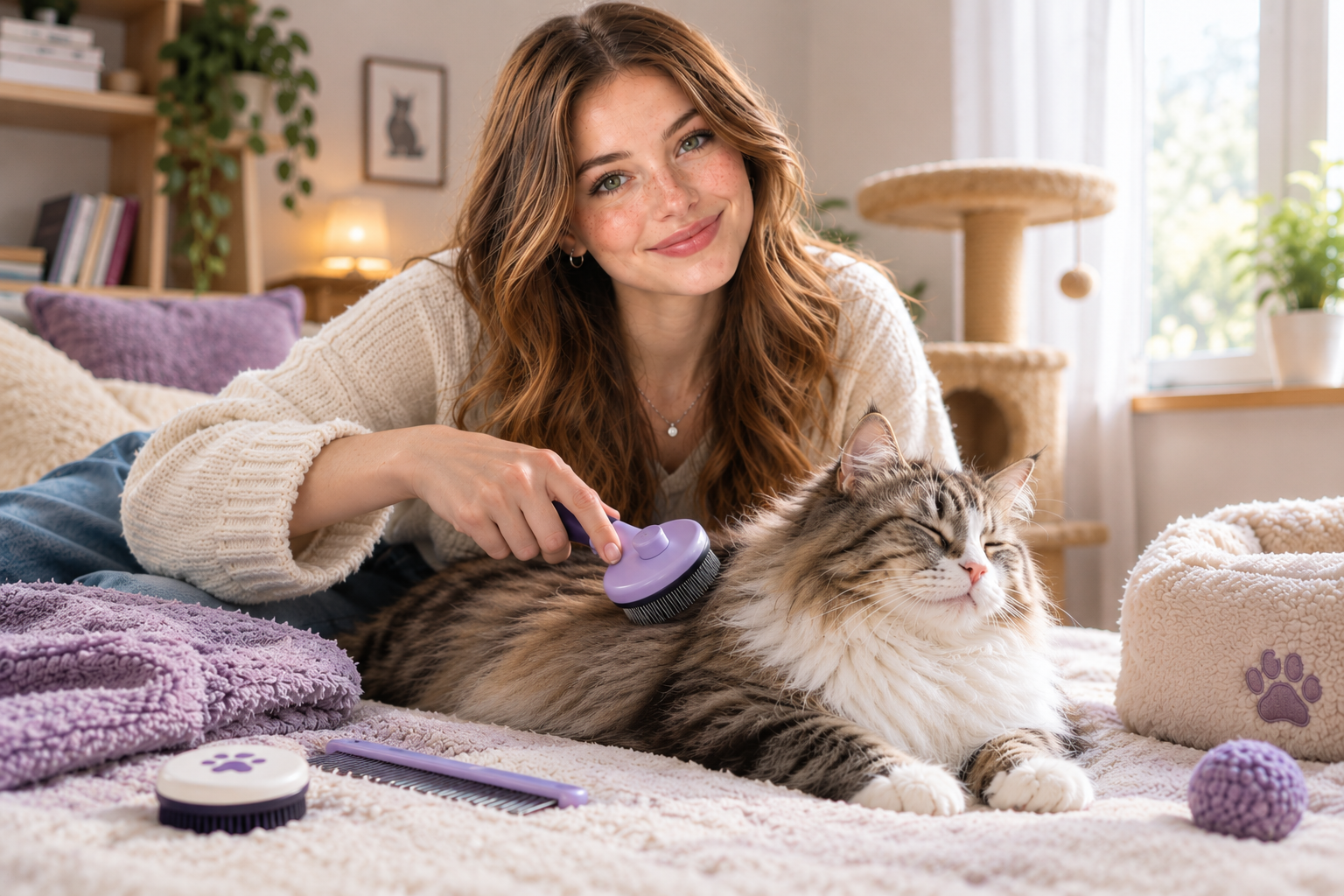
How to Groom Your Cat at Home: A Simple Guide for Cat Owners
Grooming your cat at home can be a simple way to care for their coat, reduce loose fur around your home, and notice changes in their skin or appearance. Although cats spend a lot of time cleaning themselves, many still benefit from regular brushing and occasional help with other grooming tasks.
The best approach is to keep grooming gentle, use tools suited to your cat’s coat, and work at a pace your cat can tolerate. You do not need an elaborate routine or a large collection of grooming products to get started.
In this guide, you’ll learn how to groom your cat at home, which tools to use, how often to brush your cat, and when professional or veterinary help may be needed.
Why Is Regular Cat Grooming Important?
Cats naturally groom themselves, but self-grooming does not remove every loose hair or prevent every tangle. Helping your cat with routine grooming can make coat care easier and give you an opportunity to check for changes that might otherwise go unnoticed.
Regular grooming can help you:
- Remove loose fur: Brushing collects loose hair before it spreads around your home.
- Reduce tangles: Regular combing helps prevent knots from developing, especially in long-haired cats.
- Monitor skin and coat condition: Grooming gives you an opportunity to notice unusual bumps, bald patches, redness, or parasites.
- Keep your cat comfortable: Removing tangles and excess loose fur can make coat maintenance easier.
- Build a familiar routine: Gentle, positive grooming sessions can help your cat become more comfortable with being handled.
The amount of grooming your cat needs depends on coat length, condition, age, and how well they groom themselves. Long-haired cats generally need more frequent attention than short-haired cats. Source: ASPCA
What Do You Need to Groom a Cat at Home?
You can begin with a few basic supplies. Choose tools designed for cats and appropriate for your pet’s coat rather than buying every grooming accessory available.
1. A Suitable Cat Brush
A cat brush helps remove loose fur and surface debris. Soft rubber brushes can be useful for some short-haired cats, while suitable slicker brushes or grooming brushes may help with other coat types.
Choose a brush that works gently through your cat’s fur without scratching or irritating the skin.
2. A Cat Comb
A comb can help you identify small tangles and gently work through areas where a brush may not be sufficient. A wide-toothed comb can be particularly useful for longer coats.
Never pull forcefully at a knot. Tight mats close to the skin may need professional attention.
3. Cat-Specific Shampoo
Most healthy cats do not need frequent baths. If your cat becomes unusually dirty or gets something on their coat that requires washing, use a shampoo specifically formulated for cats.
Human shampoo is not an appropriate substitute because it may irritate or dry your cat’s skin.
4. A Soft Towel
A soft towel is useful for drying your cat after a necessary bath or gently wiping a small area of dirty fur.
5. Nail Clippers Designed for Cats
Cat nail clippers may be useful if you are comfortable trimming your cat’s claws. If you have never done this before, ask a veterinarian or professional groomer to demonstrate the technique.
Tip: Start with the basics. The right brush and a calm environment are more useful than a large collection of tools your cat may not tolerate.
How to Groom Your Cat at Home: Step by Step
A successful grooming session does not have to include every task at once. Begin with brushing and gradually introduce other types of handling as your cat becomes comfortable.
Step 1: Choose a Calm Time and Place
Pick a quiet room where your cat feels secure. A relaxed moment after a meal or a play session may be a good time to begin.
Allow your cat to approach the grooming tools and become familiar with them. Avoid chasing, restraining, or forcing your cat to participate.
If your cat seems frightened or agitated, pause and try again later.
Step 2: Check Your Cat’s Coat Before Brushing
Before using a brush, gently look over your cat’s coat and skin.
Check for:
- Loose fur and small tangles
- Areas of matted hair
- Redness, wounds, or unusual bumps
- Bald patches or significant changes in coat condition
- Fleas or signs of other parasites
If you notice a skin problem, unexplained hair loss, or painful mats, consult a veterinarian rather than attempting to treat the issue through grooming alone.
Step 3: Brush Gently in the Direction of Hair Growth
Start with a few gentle strokes along your cat’s back, following the direction in which the fur grows.
Work gradually across the body, paying attention to how your cat responds. Use light pressure, and be especially careful around the belly, legs, face, and other sensitive areas.
For short-haired cats, a gentle brushing routine can help remove loose fur. Long-haired cats may need more frequent brushing and careful combing to prevent tangles.
If your cat moves away, becomes tense, or tries to stop the session, give them a break.
Step 4: Deal With Tangles Carefully
Small, loose tangles may sometimes be worked through gently with an appropriate comb.
Hold the fur near the base to reduce pulling on the skin, and work slowly from the outer part of the tangle. Stop if your cat shows discomfort.
Do not pull hard at knots, and never cut close to the skin with scissors to remove a mat. A veterinarian or experienced groomer can safely assess stubborn or tightly matted fur.
Step 5: Check the Paws and Nails
During routine handling, take a quick look at your cat’s paws. Check for visible debris, swelling, wounds, or anything caught between the toes.
Nail trimming is a separate task and should only be attempted if you know how to identify the sensitive part of the nail. Trim only the tip, avoiding the pink area containing blood vessels and nerves.
If your cat resists, or you are uncertain about the technique, ask a veterinarian or groomer for help. Never force a nail-trimming session.
Step 6: Check the Ears Without Probing Inside
Look at the visible parts of your cat’s ears for redness, swelling, discharge, or an unusual smell.
Do not insert cotton swabs or other objects into the ear canal. If the ears appear dirty or irritated, ask your veterinarian whether cleaning is necessary and which product to use.
Step 7: Bathe Your Cat Only When Necessary
Most cats keep themselves reasonably clean and do not need regular baths.
A bath may be appropriate if your cat has a substance on their fur that cannot be removed safely by brushing or gentle spot-cleaning. Before bathing, make sure the substance is not potentially toxic; contact a veterinarian promptly if you are unsure.
When a bath is needed:
- Prepare a secure, nonslip surface and use lukewarm water.
- Use a shampoo specifically formulated for cats.
- Keep water and shampoo away from the eyes, nose, and ear canals.
- Rinse thoroughly so no shampoo residue remains.
- Dry your cat gently with a towel in a warm, draft-free area.
If bathing causes significant distress, stop and seek professional advice. Some substances require specific treatment, so do not attempt to wash off unknown chemicals or potentially harmful products without veterinary guidance.
Step 8: End With a Positive Experience
Finish the session before your cat becomes overwhelmed. Offer calm praise, a favorite treat if appropriate, or a little time to relax in a familiar place.
The goal is not to complete every grooming task in one sitting. Short, comfortable sessions are often more practical than a long session that leaves your cat frightened.
How Often Should You Groom Your Cat?
There is no single schedule that suits every cat. Coat length, shedding, tangles, age, and your cat’s tolerance all affect how often grooming is needed.
| Cat type | General grooming approach |
|---|---|
| Short-haired cat | Start with one or two gentle brushings per week and adjust as needed. |
| Long-haired cat | Brush or comb every few days, or more frequently if tangles develop. |
| Older cat | Monitor coat condition and provide extra help if self-grooming becomes more difficult. |
| Cat with mats or skin problems | Seek individual advice from a veterinarian or professional groomer. |
These are starting points, not rigid rules. Some long-haired cats need daily coat care, while others require a different routine. If your cat’s grooming habits suddenly change, arrange a veterinary assessment. Sources: ASPCA and Cornell Feline Health Center
How to Choose the Right Grooming Brush for Your Cat
The best cat grooming brush is one that suits your cat’s coat and can be used without irritating the skin.
For Short-Haired Cats
Look for a brush or grooming tool designed to remove loose fur from short coats. A soft rubber brush or an appropriate grooming brush may work well, depending on your cat’s preferences.
For Long-Haired Cats
A suitable slicker brush and a wide-toothed comb may help manage loose fur and small tangles. Brush regularly and inspect areas where knots tend to form.
For Cats That Dislike Brushing
Try introducing the brush gradually. Let your cat sniff it, begin with one or two gentle strokes, and stop while the experience is still comfortable.
A self-cleaning brush or a steam-style grooming brush may appeal to some owners because of its design or cleaning mechanism, but no particular brush is right for every cat. Introduce any new tool gently, follow its instructions, and stop using it if it causes discomfort or frightens your pet.
When choosing a grooming tool, prioritize suitability for your cat’s coat, gentle handling, and ease of use rather than the number of advertised features.
Common Cat Grooming Mistakes to Avoid
Even with good intentions, some grooming habits can make the experience more difficult for you and your cat.
Brushing too aggressively: Excessive pressure can irritate the skin. Use gentle strokes and a suitable tool.
Pulling at mats: Forceful combing can cause pain. Seek professional help for tight or extensive mats.
Bathing too often: Most cats do not require frequent baths. Bathe only when there is a clear need or a veterinarian recommends it.
Using products made for humans: Human shampoos and other personal-care products may not be appropriate for cats. Choose products specifically intended for feline use.
Forcing your cat to continue: Scratching, biting, persistent struggling, or obvious distress are signs to stop. Do not punish your cat for resisting.
Ignoring changes in grooming behavior: Excessive licking, bald patches, sudden difficulty grooming, or a neglected coat can be signs of an underlying problem.
When Should You Contact a Veterinarian or Professional Groomer?
Home grooming is appropriate for many routine tasks, but it is not a substitute for professional care when a problem is present.
Contact a veterinarian if you notice:
- Sudden or significant hair loss
- Red, swollen, wounded, or painful skin
- Persistent scratching or excessive licking
- Ear discharge, odor, or swelling
- A sudden decline in your cat’s usual self-grooming
- A substance on the coat that may be toxic
- Signs of pain or distress during ordinary handling
A professional groomer may be able to help with difficult coat maintenance, while a veterinarian can investigate medical causes and advise on appropriate treatment. Do not attempt to remove severe mats or treat skin and ear problems with grooming tools alone.
Frequently Asked Questions About Grooming Cats at Home
Can I groom my cat at home?
Yes. Many routine tasks, including gentle brushing and checking the coat, can be done at home. Tasks such as difficult mat removal, challenging nail trims, or grooming that causes distress may require professional help.
How often should I brush my cat?
Short-haired cats may do well with one or two brushings per week, while long-haired cats often need brushing every few days or more frequently. Adjust the routine to your cat’s coat and condition.
Do cats need baths?
Most healthy cats rarely need a bath. Washing may be necessary when the coat becomes unusually dirty or contaminated, but the appropriate response depends on what is on the fur.
What is the best brush for a cat?
There is no single best brush for every cat. Choose one designed for your cat’s coat length and condition, and make sure it can be used gently without scratching the skin.
How can I groom a cat that dislikes brushing?
Introduce the brush slowly, use a quiet environment, begin with a few gentle strokes, and offer breaks. Never force the session. If grooming consistently causes distress, ask a veterinarian or professional groomer for guidance.
Is it normal for cats to shed?
Yes. Shedding is a normal process, and regular brushing can help collect loose fur. However, bald patches, marked increases in hair loss, or changes in skin condition should be assessed by a veterinarian.
Final Thoughts: Make Cat Grooming a Gentle Routine
Learning how to groom your cat at home does not mean turning every day into a full grooming session. Start with a suitable brush, choose a calm moment, and pay attention to your cat’s response.
Regular, gentle coat care can help manage loose fur, reduce tangles, and make it easier to notice changes in your cat’s skin and appearance. Keep the routine flexible, avoid forcing uncomfortable tasks, and seek professional help whenever grooming becomes difficult or a health concern appears.
At EloriaNest, we believe that caring for the little details can make everyday life with pets more enjoyable. Choose grooming essentials that suit your cat, take things one step at a time, and make each session a more comfortable part of your shared routine.