
The Nest Journal
How to Choose the Right Lighting for Every Room in Your Home

How to Choose the Right Lighting for Every Room in Your Home
Lighting is one of the most important elements in a home, but it is often treated as an afterthought. A room can have beautiful furniture, carefully chosen colors, and thoughtful decoration, yet still feel uncomfortable if the lighting does not work well.
The right lighting does more than simply make a room brighter. It can define different areas, support everyday activities, highlight architectural or decorative details, and change the atmosphere of a space throughout the day.
The key is not to use the same type of lighting everywhere. Each room has different functions, and the lighting should respond to those needs.
In this guide, we’ll look at practical home lighting ideas for the main rooms of a home and explain how to create a more balanced lighting setup.
Understand the Three Main Types of Lighting
Before choosing individual lamps or fixtures, it helps to understand the three basic layers of residential lighting.
Ambient Lighting
Ambient lighting provides the general illumination of a room. Ceiling fixtures, recessed lights, chandeliers, and larger lamps can all contribute to this layer.
Its purpose is to provide enough overall light for comfortable movement and everyday activities.
Task Lighting
Task lighting is more focused. It is used where you need additional illumination for a particular activity.
Examples include:
- A desk lamp for working
- A reading lamp beside a chair
- Under-cabinet lighting in a kitchen
- A mirror light in a bathroom
Task lighting should make an activity easier without creating unnecessary glare.
Accent Lighting
Accent lighting is primarily used to draw attention to particular areas or objects.
It can highlight:
- Artwork
- Shelves
- Plants
- Architectural features
- Decorative objects
Using accent lighting selectively can add depth and visual interest without making the entire room brighter.
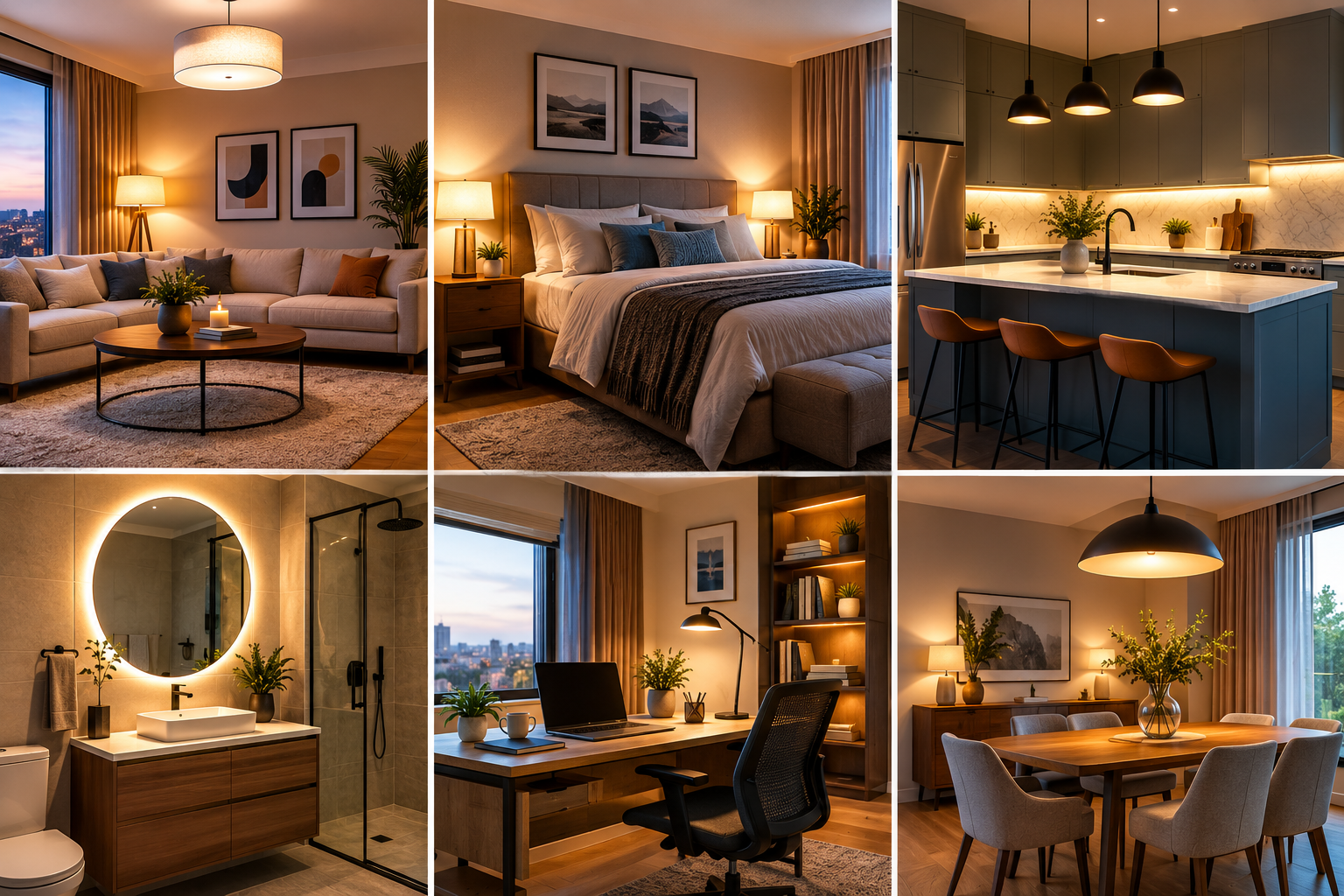
Living Room Lighting: Create Layers
The living room usually serves several purposes, from relaxing and reading to entertaining guests and watching television. Because of this, relying on a single ceiling light can make the space feel flat or overly bright.
A better approach is to combine different sources.
A ceiling fixture can provide general illumination, while floor lamps, table lamps, or other smaller lights can create additional layers around seating areas.
For a reading corner, place a focused light close enough to the chair to provide useful illumination without creating harsh glare.
You can also use accent lighting to highlight artwork, shelving, or decorative elements.
The goal is flexibility. Your living room should be able to feel bright when you need it and more relaxed when you want a quieter atmosphere.
Bedroom Lighting: Keep It Comfortable
Bedroom lighting should support relaxation as well as practical activities such as reading, getting dressed, or organizing personal belongings.
A strong overhead light may be useful when you need general visibility, but it does not always create the most comfortable atmosphere in the evening.
Bedside lamps can provide focused light for reading while keeping the rest of the room relatively calm.
Adjustable lighting can also be useful because brightness needs often change throughout the day. Brighter light can help with morning routines, while softer illumination can create a more relaxed evening environment.
Avoid placing strong light sources where they shine directly toward the bed or create unnecessary glare.
Kitchen Lighting: Prioritize Function
The kitchen requires particularly practical lighting because many activities depend on clear visibility.
General ceiling lighting provides overall illumination, but work surfaces may still remain in shadow.
This is where task lighting becomes important.
Areas such as countertops, sinks, and food-preparation surfaces benefit from focused lighting. Under-cabinet lighting can be particularly useful because it illuminates the work surface without requiring a large fixture.
When planning kitchen lighting, consider where you actually prepare food, clean, and perform other tasks. Lighting should follow the way the space is used rather than simply being placed where it looks attractive.
Bathroom Lighting: Focus on Visibility
Bathrooms require functional lighting, especially around mirrors.
Poorly positioned lighting can create strong shadows across the face, making everyday tasks such as shaving, applying makeup, or personal grooming more difficult.
A combination of general lighting and appropriately positioned mirror lighting can provide better visibility.
As with other rooms, avoid relying entirely on one powerful light source. Multiple appropriately positioned sources can distribute illumination more evenly.
Because bathrooms are exposed to moisture, lighting fixtures should also be appropriate for their intended location and installed according to applicable safety requirements.
Home Office Lighting: Reduce Glare
A home office needs lighting that supports concentration and reduces unnecessary visual strain.
Natural daylight can be useful during the day, but the position of your desk matters. If a window is directly behind or in front of a screen, reflections and glare may become distracting.
A desk lamp can provide additional task lighting when natural light is insufficient.
Position the light so that it illuminates your working area without producing strong reflections on your monitor.
A balanced combination of ambient and task lighting generally works better than depending on a single bright source.
Dining Area Lighting: Define the Space
Lighting can help make a dining area feel more intentional and visually separate from the rest of an open-plan room.
A pendant or other fixture positioned above the dining table can create a clear visual focal point.
The height and size of the fixture should be appropriate for the table and surrounding space. The light should illuminate the table without making it uncomfortable for people sitting around it.
If the dining area is part of a larger room, a dedicated light source can also help establish the dining zone without requiring physical walls.
Consider Color Temperature
Brightness is not the only characteristic that affects how lighting feels. Color temperature also plays an important role.
Different light sources can appear warmer or cooler, and this can influence the atmosphere of a room.
Warmer light is often associated with relaxed environments such as living rooms and bedrooms, while cooler-looking light can be useful in spaces where a more focused atmosphere is desirable.
Rather than choosing lighting based only on appearance, consider how the room is used and what kind of atmosphere you want to create.
Don’t Forget Natural Light
Artificial lighting is only one part of a home’s lighting plan.
Natural daylight can dramatically change how a room looks throughout the day. Furniture placement, curtains, mirrors, and the use of light-colored surfaces can all influence how much daylight reaches different areas.
Keep windows as unobstructed as practical, and consider how furniture placement affects the distribution of daylight.
This also connects with one of the simplest ways to improve the feeling of a small room: making better use of the natural light that is already available.
Avoid Common Lighting Mistakes
Even attractive lighting fixtures can work poorly if they are used without considering the room.
Some common mistakes include:
Using Only One Light Source
One central ceiling fixture rarely provides the right lighting for every activity.
Choosing Fixtures Only for Appearance
A beautiful fixture is not necessarily the right fixture for the space. Function, position, scale, and light distribution also matter.
Creating Too Much Glare
Very bright or poorly positioned lights can become uncomfortable, particularly around screens, mirrors, and seating areas.
Ignoring the Room’s Function
A bedroom, kitchen, and home office have different lighting requirements. The lighting plan should reflect those differences.
Overusing Accent Lighting
Accent lighting works best when it has a clear purpose. Too many decorative light sources can make a room feel visually busy.
Build a Lighting Plan Before Buying
Before purchasing new lamps or fixtures, walk through each room and ask three simple questions:
What activities happen here?
Where do I need focused light?
Which areas would benefit from softer or decorative lighting?
These questions can help you identify what the room actually needs instead of buying lighting based only on appearance.
You may also discover that you do not need to replace everything. Sometimes adding one well-positioned lamp or changing the location of an existing light can make a noticeable difference.
Final Thoughts
Good home lighting is not about making every room as bright as possible. It is about creating the right amount and type of light for the way each space is used.
A combination of ambient, task, and accent lighting can make rooms more functional and visually balanced. Natural daylight, color temperature, fixture placement, and glare should also be considered when planning the space.
The best home lighting ideas are ultimately the ones that work with your home and your everyday routines.
Start with one room, identify what is missing, and make small changes before replacing everything. Sometimes a better lighting setup is only one carefully chosen light away.