
The Nest Journal
How to Make Your Home Feel More Organized Without Losing Its Style

How to Make Your Home Feel More Organized Without Losing Its Style
A well-organized home does not have to look plain, empty, or overly practical. The goal is not simply to hide everything away. It is to create a space where your belongings have a place while your home still feels personal and inviting.
From crowded surfaces to everyday items that never seem to stay organized, small changes can make a noticeable difference. With thoughtful storage, fewer unnecessary items, and a little attention to how things are arranged, you can make your home feel more organized without losing the style that makes it yours.
Start by Removing What You No Longer Need
One of the simplest ways to make a room feel more organized is to reduce unnecessary clutter.
Look at the things that regularly collect on tables, shelves, countertops, and other visible surfaces. Ask yourself whether each item is useful, meaningful, or simply there because it has always been there.
You do not need to completely empty a room. Instead, focus on removing things that no longer serve a purpose or contribute to the space.
A little less visual clutter can make the things you actually love stand out more.
Give Everyday Items a Place
Organization becomes much easier when frequently used items have a designated place.
Think about the things you use every day:
- Keys
- Chargers
- Remote controls
- Books
- Bags
- Small accessories
- Everyday kitchen items
Instead of moving these items from one surface to another, create a simple place where they can stay.
A small tray, basket, drawer, or storage container can be enough to keep everyday items together.
Keep Surfaces Simple
Open surfaces can quickly become crowded.
Coffee tables, bedside tables, kitchen counters, desks, and shelves often collect a mixture of useful items and decorative objects. Rather than filling every available space, choose a few things that you genuinely want to see.
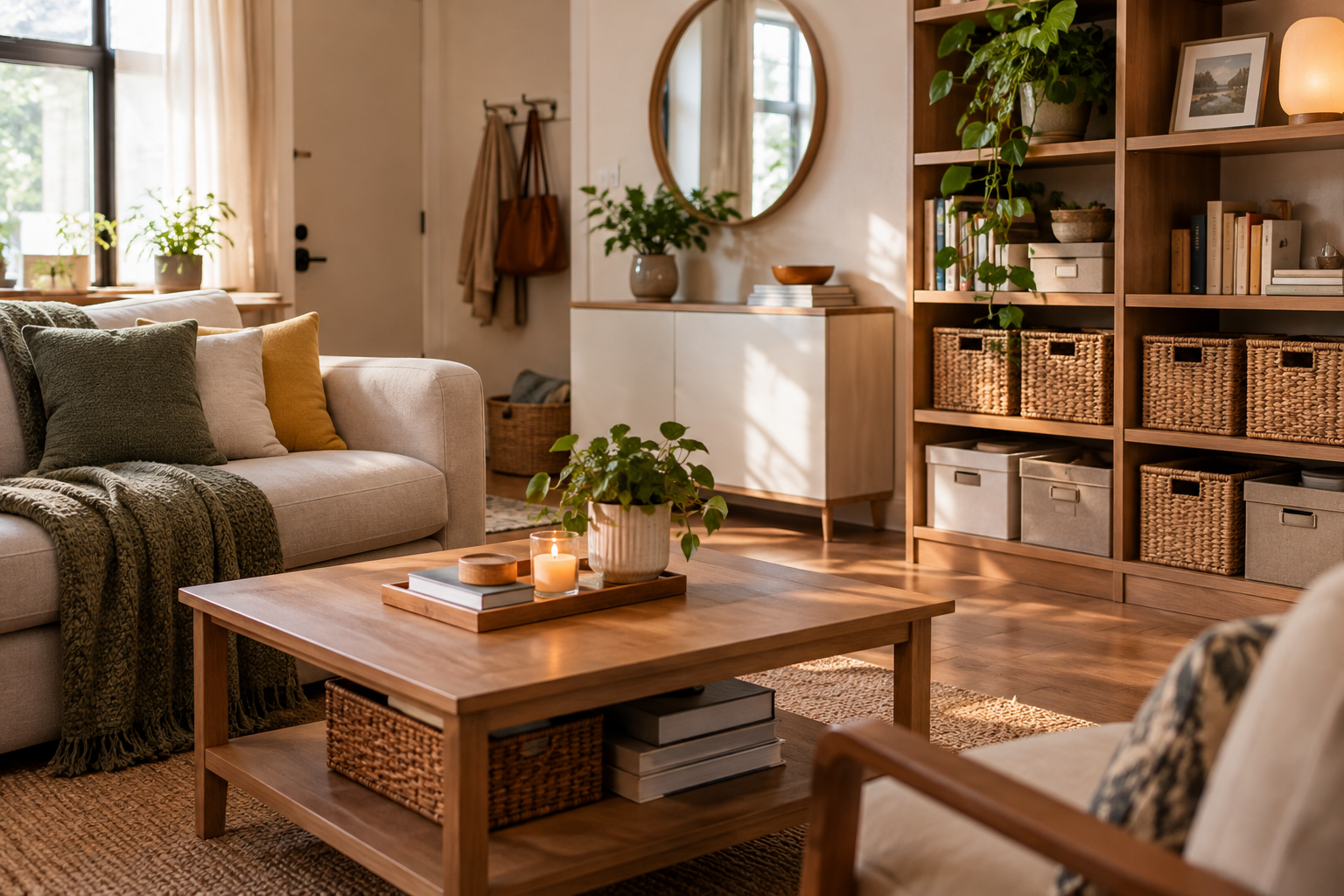
For example, a coffee table might only need a small plant, a book, and one decorative object.
Leaving some empty space around your belongings can make the entire room feel calmer.
Use Storage That Fits Your Space
Good storage does not have to mean adding large cabinets or complicated furniture.
Choose storage according to the space you already have. Baskets, boxes, shelves, drawers, and small organizers can help keep belongings together without taking over the room.
If floor space is limited, look upward.
Wall shelves and other vertical storage solutions can make use of available wall space while keeping the floor clearer.
Make Organization Part of the Decor
Storage does not always need to be hidden.
Baskets, boxes, trays, and containers can become part of the room’s overall appearance when you choose pieces that work with your existing decor.
Natural textures, simple shapes, and colors that complement the room can make practical storage feel intentional rather than out of place.
The key is to choose storage that works with your style instead of trying to hide every organizational solution.
Create Small Organized Zones
You do not have to organize your entire home at once.
Start with small areas that tend to become messy.
A bedside table can become a simple night-time zone. A small area near the entrance can hold everyday essentials. A desk can be arranged around the items you actually use while working.
Creating these small zones gives everyday belongings a logical place and can make routines easier.
Keep Frequently Used Items Easy to Reach
Organization should make your home easier to live in, not harder.
Items you use frequently should be accessible. If something is used every day, placing it somewhere difficult to reach may only create another organizational problem.
Keep everyday essentials within easy reach and reserve less accessible storage for things you use less often.
This simple distinction can make an organized space much easier to maintain.
Avoid Over-Organizing
It is possible to take organization too far.
A home does not need every item to be hidden inside a container or arranged perfectly. Your home is a living space, and some signs of everyday life are natural.
The goal is not perfection.
A useful system is one that you can maintain without constantly rearranging everything.
Let Your Personality Stay Visible
An organized home should still feel like your home.
Keep the photographs, books, plants, artwork, decorative pieces, and other objects that have meaning to you.
Organization should create space for personality rather than remove it.
When unnecessary clutter is reduced, meaningful pieces can actually become more noticeable.
Make Organization a Small Daily Habit
Keeping a home organized becomes easier when it is part of your routine.
Instead of waiting until everything feels messy, spend a few minutes putting things back where they belong.
Return items after using them. Clear surfaces when they become crowded. Put away things that have been left out.
Small habits can prevent a larger organizational task later.
A More Organized Home Can Still Feel Warm
An organized home does not have to feel cold or minimal.
You can have practical storage, clear surfaces, and designated places for everyday items while still keeping warm textures, personal belongings, plants, artwork, and decorative details.
The key is balance.
Organize the things you use, remove what you do not need, and leave room for the things you love.
Your home does not need to look perfect to feel organized. It simply needs to work for the way you live.