

The Nest Journal
How to Make Your Home Feel Cozy Without Spending a Lot

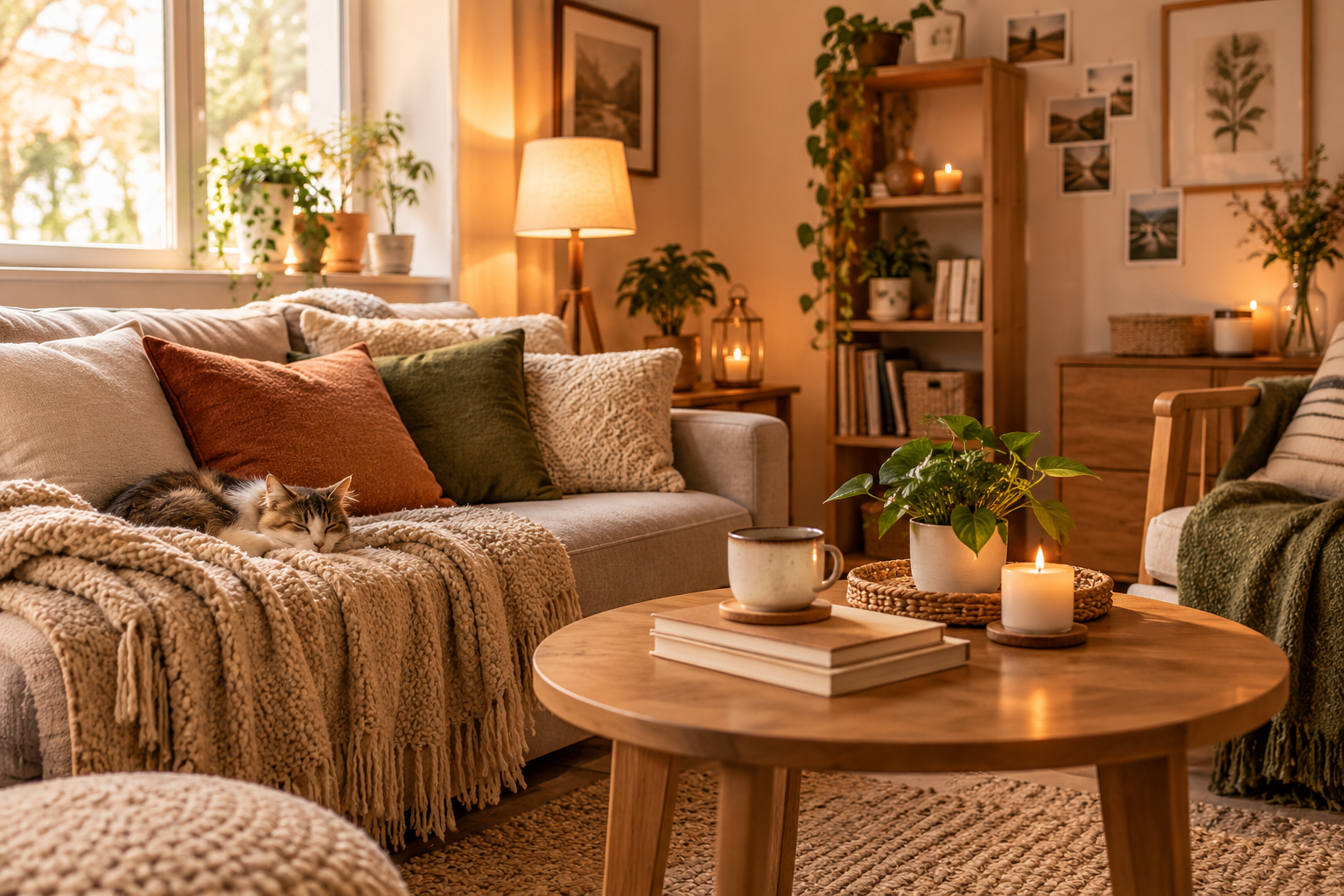
A cozy home isn’t about buying more things. It’s about making the space you already have feel warmer, calmer, and more like you.
You don’t need expensive furniture, a complete home makeover, or a huge decorating budget to create a cozy home. In fact, some of the biggest changes can come from simple details: softer lighting, comfortable textures, a little organization, and a few personal touches.
Whether you live in a small apartment, a rented home, or simply want to make your current space feel more inviting, these simple ideas can help you create a cozy atmosphere without spending a lot of money.
Quick Answer: What makes a home feel cozy?
The easiest ways to make a home feel cozy are to improve the lighting, add soft textures, reduce visual clutter, introduce warm colors, personalize your space, and create small areas designed for comfort.
You don’t have to do everything at once. Start with one or two changes and build from there.
1. Start With Your Lighting
Lighting can completely change how a room feels.
Bright overhead lighting is practical, but it doesn’t always create the warm atmosphere most people associate with a cozy home. Instead, try adding smaller sources of light around the room.
Think about:
- A small table lamp beside your sofa
- A warm bedside lamp
- String lights around a shelf or headboard
- A small decorative lamp in a dark corner
- Candles or battery-operated candles for occasional ambiance
The goal isn’t to make the room darker. It’s to create layers of light so the room feels softer and more inviting.
A simple rule:
Use your main light when you need to see. Use smaller lights when you want to relax.
2. Add Soft Textures
One of the easiest ways to make a room feel warmer is to introduce things that look and feel soft.
A simple throw blanket on a sofa can make a living room feel more inviting. Cushions, rugs, curtains, and soft bedding can have a similar effect.
You don’t need to replace everything.
Instead, try adding just one or two pieces:
Blanket + cushions = instant cozy corner.
Look for textures such as cotton, knitted fabrics, fleece, linen, or other materials that add visual softness to the room.
And remember: cozy doesn’t necessarily mean filling every available space. A few carefully chosen textures can work better than a room crowded with decorative items.
3. Declutter One Small Area
A cozy home doesn’t have to be perfectly organized.
But too much visual clutter can make a room feel stressful rather than relaxing.
Instead of attempting a huge weekend-long decluttering project, choose one small area.
For example:
- Your coffee table
- One kitchen counter
- Your bedside table
- A bathroom shelf
- The area next to your sofa
Remove anything you don’t use or need there.
Then keep only the things that are useful, beautiful, or meaningful to you.
Why does this work?
A smaller visual field gives the eye fewer things to process. The result can make the entire room feel calmer without buying anything at all.
4. Bring a Little Nature Indoors
Plants and natural elements can make a space feel more alive.
You don’t need to turn your home into a jungle. Even one small plant on a shelf, desk, or windowsill can add personality to a room.
If keeping plants alive isn’t your thing, you can still bring in natural details through:
- Wooden accessories
- Dried flowers
- A small vase
- Woven baskets
- Natural-looking fabrics
- Stones or other simple decorative elements
The idea is simple: bring a few organic shapes and textures into an otherwise artificial environment.
5. Create a Cozy Corner
You don’t need an entire room dedicated to relaxation.
A small corner can become your favorite place in the house.
It could be:
A chair + soft blanket + small table + warm lamp.
Or:
A sofa corner + cushion + book + small light.
Or even:
A window seat + blanket + cup of tea.
What matters is creating a space that has a clear purpose: slow down and feel comfortable.
Once you have that corner, keep the things you actually enjoy there.
6. Use Warm, Calm Colors
Color has a huge influence on the atmosphere of a room.
You don’t necessarily need to repaint your walls. Instead, introduce warmer colors through smaller items.
Consider shades such as:
- Cream
- Beige
- Warm white
- Soft brown
- Terracotta
- Muted green
- Dusty pink
You can use these colors in cushions, blankets, curtains, rugs, artwork, or small decorative objects.
Don’t worry about matching everything.
A cozy room usually feels more natural when the colors complement each other rather than looking perfectly coordinated.
7. Make Your Bedroom Feel More Relaxing
Your bedroom doesn’t need expensive furniture to feel comfortable.
Start with the things you interact with every day.
Make your bed inviting. Keep your bedside table relatively clear. Use softer lighting in the evening and introduce one or two textures you enjoy.
A simple combination can make a noticeable difference:
Clean bedding + soft blanket + warm lighting + less clutter.
If your bedroom is also your workspace, try creating a visual separation between your work area and your sleeping area. Even a small change can help the room feel more restful.
8. Display Things That Actually Mean Something to You
One of the fastest ways to make a house feel like your home is to stop decorating for an imaginary showroom.
Display things you genuinely like.
A photograph.
A souvenir from a trip.
A favorite book.
A handmade object.
A gift from someone important.
A piece of artwork that makes you smile.
These little details tell a story.
And that’s what makes a space feel personal rather than simply decorated.
9. Make Everyday Objects Part of the Decor
Here’s a simple trick: don’t hide everything.
Some everyday objects can actually make a home feel more lived-in and beautiful when they’re arranged thoughtfully.
A nice mug on a small tray.
A favorite book beside the sofa.
A perfume bottle on a vanity.
A small basket for everyday essentials.
A beautiful water bottle on your desk.
The key is choosing objects you already use and giving them a deliberate place.
This can make your home feel more put together without buying decorative items just for decoration.
10. Don’t Try to Do Everything at Once
This might be the most important tip.
You don’t need a completely different home.
Start small.
Today, you might clear your bedside table.
Tomorrow, you might add a warmer lamp.
Next week, you might find a soft throw blanket.
Over time, these small changes can completely change how your home feels.
A cozy home is built gradually, not bought all at once.
How Can I Make a Small Home Feel Cozy?
If you have a small apartment or limited space, focus on comfort without clutter.
Choose items that are useful as well as beautiful. Use vertical space, keep surfaces relatively clear, and avoid filling every empty corner.
Soft lighting, a comfortable textile, a plant, and a few personal objects can often do more for a small room than adding lots of furniture.
For small spaces, the goal isn’t to make the room look fuller.
It’s to make the space you already have feel better.
How Much Does It Cost to Make a Home Cozy?
It can cost almost nothing.
Before buying anything, rearrange your furniture, declutter a small area, change your lighting, move existing decorative items, or bring out things you’ve stored away.
If you do want to spend a little money, prioritize items that have both practical and aesthetic value, such as a useful lamp, comfortable blanket, storage basket, or cushion.
A cozy home is more about atmosphere than price.
Eloria’s Simple Cozy-Home Formula ♡
If we had to make it incredibly simple, we’d start here:
**Warm light
- Soft texture
- Less clutter
- Something natural
- Something personal
= A cozier home**
You don’t need a perfect home.
You need a home that feels good to come back to.
And sometimes, the smallest changes are the ones you notice the most.
Frequently Asked Questions
What is the easiest way to make a home feel cozy?
The easiest changes are usually improving the lighting, adding a soft blanket or cushions, reducing clutter, and creating one comfortable corner for relaxing.
How can I make my home cozy on a budget?
Start with things that cost nothing: rearrange furniture, declutter surfaces, change the placement of existing lamps and decorations, and create a dedicated relaxation corner. Then add inexpensive items such as cushions, blankets, baskets, or warm lighting if needed.
How do I make a small room feel cozy without making it look cluttered?
Use fewer, more intentional items. Choose multifunctional pieces, keep surfaces clear, use soft textures, and rely on lighting and color to create warmth instead of adding more furniture.
What colors make a home feel cozy?
Warm neutrals such as cream, beige, warm white, soft brown, terracotta, and muted green can create a calm and inviting atmosphere. You don’t need to repaint your entire home; small accents can be enough.
Does a cozy home have to be expensive?
No. Coziness comes primarily from lighting, texture, organization, comfort, and personal details—not the price of the furniture or decorations.
A Little Something from Eloria’s Nest ♡
Want to add a few cozy touches to your space?
Explore Eloria’s Home & Living Finds — practical little pieces chosen to make everyday spaces feel a little warmer, calmer, and more personal.
One thought on “How to Make Your Home Feel Cozy Without Spending a Lot”